
In order to answer this question let’s look at a brief history of Personal Colour Analysis. During the Impressionist movement, young artists in Paris began to paint outside.


They noticed the effects of light and colour on the landscape, and they began an intensive study of how sunlight, the atmosphere, weather conditions–different seasons and times of day effect colour. They began to organize colours around the four seasons. This was the birth of Seasonal Colour Theory as it evolved organically as a simple way to refer to the unique colour tones found during the four seasons Winter, Spring, Summer and Autumn.

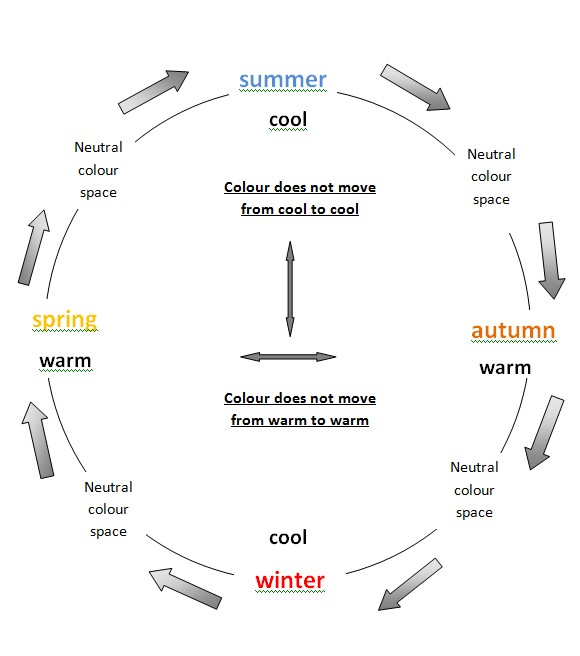
Companies such as Colour Me Beautiful (and more recently House of Colour) commercialised Seasonal Colour Theory in the 70’s and 80’s which provided a great introduction to personal colour analysis for many individuals. However, Analysts soon discovered that four categories did not allow for the large variety of human colouring which they encountered. At the time, it was assumed that all human beings could be classified into just two groups- warm or cool – with Winter and Summer considered cool, and Spring and Autumn considered warm. As analysts soon discovered, in the majority of cases, warmth or coolness of hue was not easily established and often found it difficult, if not impossible, to determine with any certainty. As a result, over two-thirds of those who had been “seasonally” analysed within the 4-tone system felt something was ‘not quite right’ with many of their colours.
The reason for this difficulty and subsequent ‘miss diagnosis’ is that the majority of colours are neither warm nor cool, but are in fact somewhere in between these two extremes.
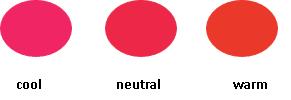
For example, a red colour with a yellow content is considered a warm red. A red colour with a blue content is considered a cool red. A red that contains both yellow and blue is neither warm nor cool but considered ‘neutral.’ A colour, therefore, may be considered as warm, cool, or neutral. What we now know is that approximately 2/3 of all human beings colouring falls into this ‘neutral’ area of colour space.
An Accurate Personal Colour System is Not Arbitrary
Over the years numerous attempts have been made to expand seasonal colour theory to overcome the limitations of the 4 tone system. The results from these attempts have been varied in terms of their accuracy according to what we understand to be true about colour, and the manner in which a human being perceives it.
What we do know is that an accurate personal colour system must acknowledge that over 2/3 of all human beings fall into the neutral are of colour space. Secondly, to achieve colour harmony the hues within a pallet and with a client’s skin tone, the “natural order of colour” must be observed. This natural order cannot be changed and is consistent with the electromagnetic (visible) spectrum which is most recognizable in the form of a rainbow. In this natural order we can see that colour moves from cool to warm, than back to cool and so forth. Colour never moves from cool to cool or warm to warm. For more information on this please click on the following link and refer to the post “warm+warm and cool+cool” http://www.truecolour.com.au/main/page_blog.html.

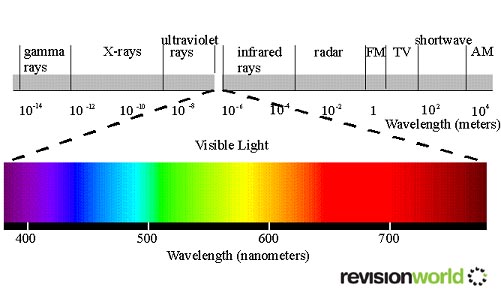
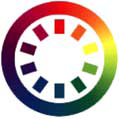
This natural movement of colour is also seen in the artists colour wheel, which is simply the result of joining the two edges of the visible spectrum to form a complete circle.
The natural realm of colour is vast and in reality we could create 100’s of different tonal groups within a personal colour system, however our ability to distinguish difference is limited by our visual capability as human beings. If we are unable to see the difference between hues from one tone to the next, then the exercise would serve no purpose. To arbitrarily add more or less tonal spaces would not be consistent with the natural order of colour.
Another point to consider is that with each division, the number of possible hues within each tone diminishes accordingly. Put simply, it is because there are 12 tones that there are between 65-80 different hues available in each. Likewise there are no two colours found within two different tones, commonly known as ‘cross-over’ colours. Each of the 12 tonal groups should be distinct and distinguishable from each of the others.
The fact there are so many colour systems is a result of an industry with no colour standard. Colour is the way it is and a personal colour system simply reflects that accurately, or not.
5 replies to “Are There More Than 12 Tones Available in a Personal Colour System?”
Can you be more specific about the content of your article? After reading it, I still have some doubts. Hope you can help me. https://www.binance.com/da-DK/register?ref=V2H9AFPY
Thank you for your sharing. I am worried that I lack creative ideas. It is your article that makes me full of hope. Thank you. But, I have a question, can you help me? https://accounts.binance.com/es-AR/register?ref=UT2YTZSU
Can you be more specific about the content of your article? After reading it, I still have some doubts. Hope you can help me.
Thank you for your sharing. I am worried that I lack creative ideas. It is your article that makes me full of hope. Thank you. But, I have a question, can you help me?
I don’t think the title of your article matches the content lol. Just kidding, mainly because I had some doubts after reading the article. https://accounts.binance.bh/register/person?ref=IHJUI7TF